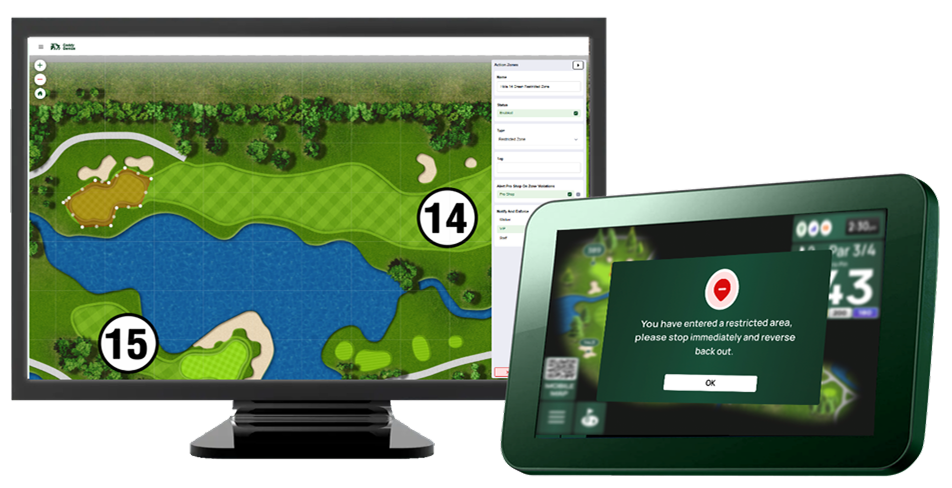
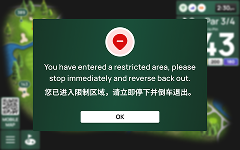
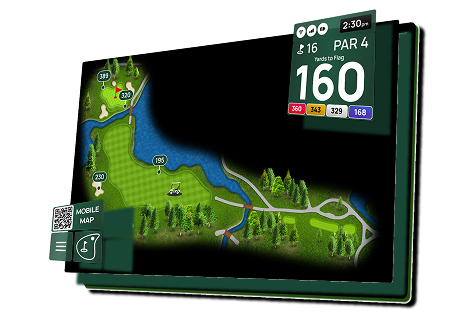
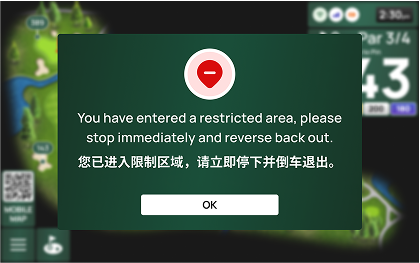
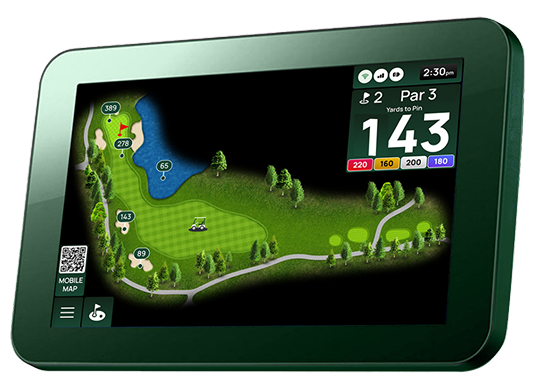
Carts repeatedly entering restricted zones like greens, collars, and soft turf areas can lead to expensive damage and constant repair cycles. Caddy Genius uses geofencing to automatically prevent carts from entering these sensitive zones—reducing wear, repair frequency, and staff hours spent on recovery.
Annual savings in labor reduction: $4,900–$8,750 USD
Labor Costs:
Turf crews typically spend 4–6 hours/week repairing damaged turf. With GPS restrictions in place, you can reduce that by 60–80%, saving ~200–250 hours/year.
- 200 hrs x $12 = $2,400/year
- 250 hrs x $15 = $3,750/year
→ Estimated labor savings: $2,400–$3,750/year
Seed, Sod, and Fertilizer Usage
With less damage, material usage drops by an estimated 20–40%. If a course spends $10,000/year on turf restoration materials, that’s a savings of: $2,000–$4,000/year
Reduced Equipment and Fuel Use
Fewer repair cycles = less equipment time and fuel usage
→ Estimated savings: $500–$1,000/year
These savings are immediate, measurable, and recurring.

 简体中文 (Simplified)
 繁體中文 (Traditional)